Table of Contents
- Introduction
- What YouTube Shopping Is in 2026
- The Shopping Ecosystem
- Commission Ranges by Category
- Eligibility: YPP, Subscriber Threshold, and Region
- Tagging Products at Timestamps
- Shopping in Shorts and Live Streams
- Realistic Income From Product-Focused Content
- Combining Shopping With Other Streams
- Requirements Change — Check YouTube Help
- Frequently Asked Questions
- Final Takeaway
YouTube Shopping turns your videos into a storefront: tag products at the exact moment you mention them, earn commissions of 2% to 18% by category, and let viewers buy without leaving the platform.
YouTube Shopping is the closest thing to a built-in storefront the platform has ever offered. Instead of sending viewers off to an external link in your description, you tag products directly in the video, a shopping-bag icon appears, and viewers can buy without ever leaving YouTube. For product-centric channels — reviews, tutorials, beauty, tech, fashion, fitness — that changes the game: every video becomes a display window and every mention can become a sale. This guide covers the full YouTube Shopping ecosystem in 2026, the commissions by category, the eligibility requirements, how to tag products at the right moment, and what product-focused content can realistically earn.
Introduction
Shopping on YouTube is a growing ecosystem rather than a single feature. It includes Shopping Affiliate (tagging products from brand catalogs for commission), the merch shelf (selling your own branded products), live-stream shopping (selling in real time), and the YouTube Store tab that gathers it all in one place. Commissions vary by category from roughly 2% to 18%, and eligibility sits behind the YouTube Partner Program. This guide unpacks each piece, explains the commission math, walks through tagging, and gives you a realistic picture of income from product-focused content. Requirements in this space have shifted over the years, so the final section tells you exactly where to check the current rules.
What YouTube Shopping Is in 2026
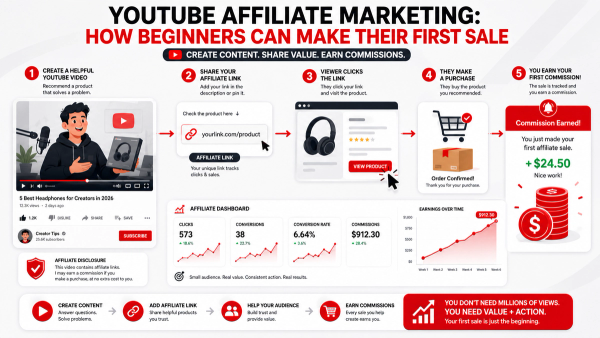
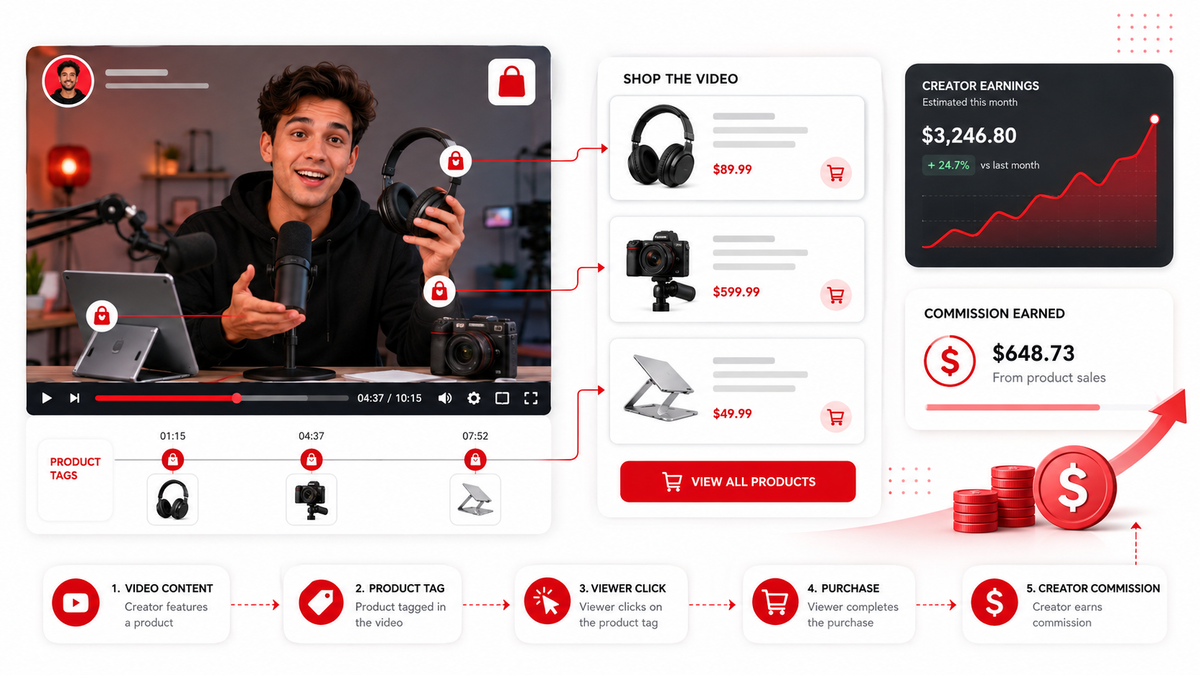
At its core, YouTube Shopping closes the loop between a recommendation and a purchase. A creator mentions a product, tags it in the video at the moment of mention, and a shopping-bag icon appears so viewers can tap through to the product and check out. The brand or retailer fulfills the order; you earn a commission. The reason it matters to creators is friction: a viewer who has to search for a product in another tab is a sale that leaks away. A viewer who can buy in two taps is a sale that closes. The second reason it matters is data. Shopping conversions show you exactly which products your audience buys, which turns content strategy from guessing into measurement. A video that sends the most people to checkout is not just a good video — it is a signal about what to make next.
The Shopping Ecosystem
Four pieces make up the ecosystem, and most creators will touch several.
- Shopping Affiliate: you tag products from brand catalogs and earn a commission on sales. This is the entry point for most creators and works inside videos, Shorts, and live streams.
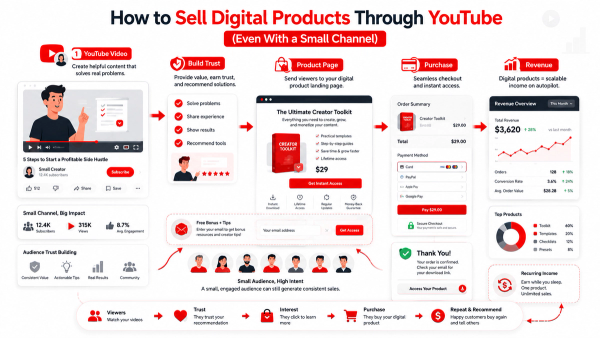
- Merch shelf: you sell your own branded merchandise — t-shirts, prints, stickers — displayed on your channel. The margin is yours, minus fulfillment costs.
- Live-stream shopping: during a live stream, you feature products and viewers buy in real time, with the stream doubling as a live demo and checkout.
- YouTube Store tab: the channel-level store that aggregates all your tagged and own products in one shopping destination.
A creator starting today should begin with Shopping Affiliate — it requires no inventory and no fulfillment, just a channel and an audience that buys. The merch shelf and store tab become relevant once you have products of your own to sell.
Commission Ranges by Category
The commission you earn depends on the product category, because categories carry different margins and different demand. Realistic 2026 ranges:
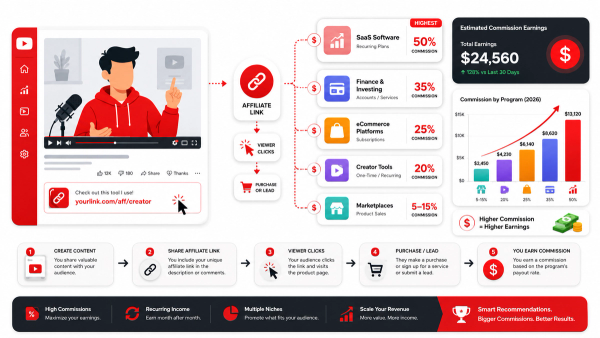
- Beauty: 8% to 18%
- Fashion: 6% to 15%
- Home: 5% to 12%
- Fitness: 8% to 15%
- Electronics: 2% to 6%
These are estimates and individual products or brands can sit above or below the range. Notice the pattern: beauty and fitness reward creators richly because margins are high and discovery drives purchase; electronics pay less per sale because items are expensive and price-sensitive. What matters is matching the category to your content — a beauty channel earning 12% on a $40 product earns roughly $4.80 per sale, while an electronics channel at 4% on a $500 laptop earns roughly $20. The math rewards fit over category.
Eligibility: YPP, Subscriber Threshold, and Region
YouTube Shopping is gated behind the YouTube Partner Program, and Shopping Affiliate has historically carried an additional subscriber threshold on top of YPP approval. That threshold has changed over time — it has been raised, lowered, and adjusted by region — which is exactly why this guide cannot give you a single number that stays true. In 2026 the reliable way to check is the current YouTube Help documentation on Shopping, which lists the live requirements for your region. What has been consistent is the structure: YPP membership first, then a product-tagging threshold, then regional availability. Some countries have full shopping access, others are limited, and the feature has expanded region by region. If you are not yet eligible, the practical response is the same as for every gated feature — build the channel, reach the threshold, and revisit. Do not build a plan around a threshold you read in a year-old article.
Tagging Products at Timestamps
Tagging is the mechanical skill of YouTube Shopping, and doing it well is the difference between a storefront and a wall of links. The pattern that converts: tag the product at the exact timestamp you mention it. A viewer hears 'this monitor changed my setup,' sees the shopping-bag icon appear at that moment, and taps while the intent is fresh. Tagging ten products at the video's start buries each tag's context and kills the impulse. The mechanics are straightforward once you are eligible: open the video editor, add product tags at the relevant timestamps, and review them before publishing. Keep tags accurate to what the video actually shows — a tagged product the viewer cannot see in the scene erodes trust fast. And keep the total count sane. Three to five well-placed tags in a video outperform fifteen scattered ones, because each tag carries context instead of noise.
Shopping in Shorts and Live Streams
Shopping is not limited to long-form. In Shorts, tags appear during the short clip itself, and while Shorts audiences are faster-moving, the impulse-buy dynamic is stronger — a viewer who loves a 30-second tutorial can buy the featured product in the same session. Live-stream shopping is the most theatrical version: you demo products in real time, answer questions as the chat fires them, and viewers buy while the energy is high. Live shopping works especially well for beauty, fitness, and fashion, where seeing a product in motion matters. The strategic point is that the three formats reach different buyer states. Long-form tags catch considered purchases, Shorts tags catch impulse purchases, and live tags catch social purchases — the ones driven by watching other people buy. A product-focused channel that uses all three formats effectively reaches the same audience at three different moments of intent.
Realistic Income From Product-Focused Content
Let us be honest about the numbers, because shopping income varies enormously with niche, audience size, and how product-led your content is. A beauty channel with 50,000 views on a demo video converting at a modest rate can earn hundreds of dollars from that single video in affiliate commissions, on top of any sponsorship the same video carries. A tech channel tagging a $500 product at 4% needs ten times more sales to match it. And a channel whose content is not product-centric at all may see near-zero shopping income regardless of views — shopping rewards product-focused content, not generic views. A reasonable way to think about it: shopping is a yield on product-centric traffic, typically adding a small-to-meaningful percentage on top of what the same video earns from ads and sponsorships. The Thumbix YouTube Money Calculator can fold estimated shopping commissions into your per-video picture, and the Revenue Goal Calculator works the inverse — if you want shopping to contribute $1,000 a month, it shows you how many sales at your category's commission rate that requires. These are estimates and every category varies; what is certain is that content built around products is what makes shopping income exist at all.
Combining Shopping With Other Streams
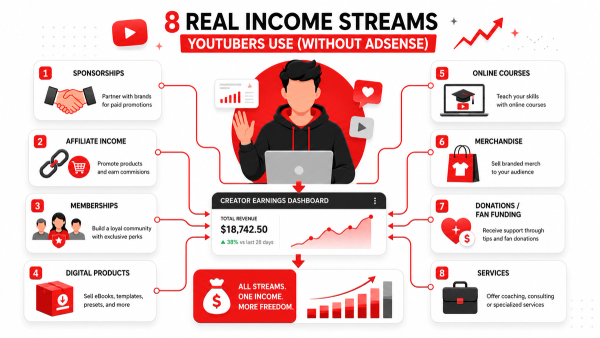
Shopping compounds with everything else you already do. A video that carries a sponsorship can also tag the sponsored product, earning affiliate commission on top of the flat fee. A product-focused video is the perfect home for affiliate links in the description, with the in-video tag as the fast lane and the description link as the second chance. And a loyal audience that buys through your tags is the same audience that joins memberships and pre-orders courses — the shopping habit is a trust signal, not just a transaction. The integration that pays most is the honest one. Tag products you actually show and recommend, price your sponsorships on the reach, and let the tags ride along as the natural second stream. Every income stream on YouTube rewards the same asset — an audience that believes your recommendations — and shopping is the most direct measurement of that belief.
Requirements Change — Check YouTube Help
If you take one thing from this guide, let it be this: YouTube Shopping's rules have moved more than almost any other monetization feature. The subscriber threshold has changed, regional availability has expanded unevenly, and the exact capabilities available to creators at different sizes have been adjusted multiple times. Any article, including this one, is a snapshot. Before you plan a launch, build a product strategy, or make a purchasing decision based on eligibility, open the current YouTube Help page for Shopping and read what it says today, for your country, with your channel's status. The practical habit is to check twice a year: once when you are planning, and once more before you rely on a specific capability. The ecosystem is still maturing, and the creators who win are the ones who read the rules as they exist rather than the ones they remember.
What is YouTube Shopping?
An ecosystem that lets creators sell products directly through their channel: Shopping Affiliate tags, the merch shelf, live-stream shopping, and the YouTube Store tab. Viewers buy without leaving YouTube.
How do I earn money with YouTube Shopping?
Tag products from brand catalogs in your videos, Shorts, or live streams and earn a commission when viewers buy. You can also sell your own merchandise through the merch shelf for full margin.
What are YouTube Shopping commission rates?
By category, estimates: beauty 8% to 18%, fashion 6% to 15%, home 5% to 12%, fitness 8% to 15%, and electronics 2% to 6%. Individual products vary.
Do I need YPP for YouTube Shopping?
Yes. Shopping is gated behind the YouTube Partner Program, and Shopping Affiliate has carried an additional subscriber threshold that has changed over time and varies by region.
How do I tag products in my videos?
Use the video editor to add product tags at the exact timestamps you mention each product, then review before publishing. Tag at the moment of mention to catch intent while it is fresh.
Can I sell my own products on YouTube Shopping?
Yes, through the merch shelf and the YouTube Store tab. The margin is yours minus fulfillment costs, and it works alongside affiliate tags from other brands.
How much can I make with YouTube Shopping?
It varies with niche, audience, and how product-led your content is. Product-focused videos can add a meaningful percentage on top of ads and sponsorships; generic content often earns near zero. All estimates.
Is YouTube Shopping available in my country?
Availability expands region by region and has changed over time. Check the current YouTube Help documentation for Shopping, which lists live requirements and availability for your country.
Final Takeaway
YouTube Shopping turns the channel into a storefront, and for product-focused creators it is one of the most natural income streams on the platform. Start with Shopping Affiliate — tag products at the timestamp you mention them, match the category to your content, and let long-form, Shorts, and live formats each catch a different kind of buyer. Eligibility requires YPP and a region-dependent threshold that keeps changing, so verify the current rules in YouTube Help before you plan. The commissions are real, the friction is low, and the data is valuable. Build content around products your audience actually buys, and the storefront sells while the videos do their work.
Frequently Asked Questions
What is YouTube Shopping?
An ecosystem that lets creators sell products directly through their channel: Shopping Affiliate tags, the merch shelf, live-stream shopping, and the YouTube Store tab. Viewers buy without leaving YouTube.
How do I earn money with YouTube Shopping?
Tag products from brand catalogs in your videos, Shorts, or live streams and earn a commission when viewers buy. You can also sell your own merchandise through the merch shelf for full margin.
What are YouTube Shopping commission rates?
By category, estimates: beauty 8% to 18%, fashion 6% to 15%, home 5% to 12%, fitness 8% to 15%, and electronics 2% to 6%. Individual products vary.
Do I need YPP for YouTube Shopping?
Yes. Shopping is gated behind the YouTube Partner Program, and Shopping Affiliate has carried an additional subscriber threshold that has changed over time and varies by region.
How do I tag products in my videos?
Use the video editor to add product tags at the exact timestamps you mention each product, then review before publishing. Tag at the moment of mention to catch intent while it is fresh.
Can I sell my own products on YouTube Shopping?
Yes, through the merch shelf and the YouTube Store tab. The margin is yours minus fulfillment costs, and it works alongside affiliate tags from other brands.
How much can I make with YouTube Shopping?
It varies with niche, audience, and how product-led your content is. Product-focused videos can add a meaningful percentage on top of ads and sponsorships; generic content often earns near zero. All estimates.
Is YouTube Shopping available in my country?
Availability expands region by region and has changed over time. Check the current YouTube Help documentation for Shopping, which lists live requirements and availability for your country.