Table of Contents
- Introduction
- What Memberships Are and How They Work
- Eligibility: YPP Approval and the Early-Access Tier
- Designing Your Tiers
- The 70/30 Split and the iOS Caveat
- Perks That Actually Convert
- Realistic Conversion Rates
- Income by Channel Size
- How to Promote Memberships Without Being Pushy
- Memberships and Your Revenue Goal
- Frequently Asked Questions
- Final Takeaway
Memberships turn loyal viewers into recurring monthly income — at about 70 cents on the dollar. Here is how to set them up, design tiers that convert, and estimate what they can earn at your channel size.
Memberships are the quiet workhorse of YouTube income. They will not headline your revenue — sponsorships and products will — but they convert the viewers who already love you into a predictable monthly number, which is something almost no other stream offers. The economics are simple: viewers pay a recurring monthly fee, you keep roughly 70% of it, and the money arrives whether or not your latest video performed well. This guide covers how memberships work in 2026, who is eligible, how to design tiers and perks that people actually join, what real channels earn at different sizes, and how to promote the whole thing without feeling like you are shaking your audience down.
Introduction
Most creators discover memberships late, after they have already built an audience, and then wonder why they waited. Memberships are YouTube's built-in subscription feature: fans pay a monthly fee, and in exchange you give them perks — badges, emojis, exclusive content, early access. Because the fee recurs, a single enthusiastic audience member can generate years of small monthly payments. This guide walks through the eligibility requirements, the tier design that maximizes signups, the revenue split that determines what you actually keep, the perks that convert, realistic conversion math at different channel sizes, and promotion strategies that respect your audience.
What Memberships Are and How They Work
A channel membership is a monthly subscription a viewer buys on your channel page, paid for with their YouTube account. You set the price and the perks, YouTube handles billing and payments, and you receive a share of each fee on a recurring basis. The most common tiers in 2026 run from $0.99 to $49.99 per month, with the $4.99 tier the consistent sweet spot — cheap enough to be an impulse, valuable enough to feel like a real exchange. The key difference from Super Thanks and Super Chat is recurrence. A one-time tip happens once; a membership keeps paying until the member cancels. That makes memberships a base layer of income, and like all fan-funding features it depends on community warmth rather than ad rates. It is also heavily influenced by your niche and your relationship with the audience, which is why two channels of identical size can earn wildly different amounts.
Eligibility: YPP Approval and the Early-Access Tier
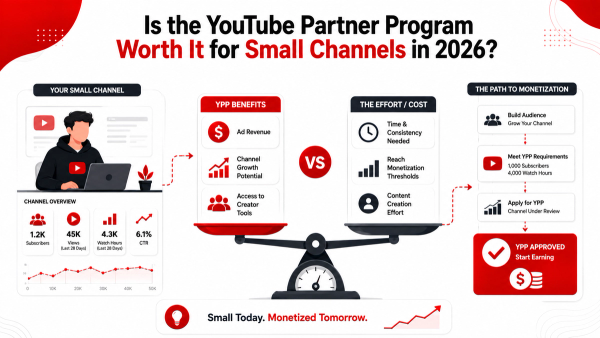
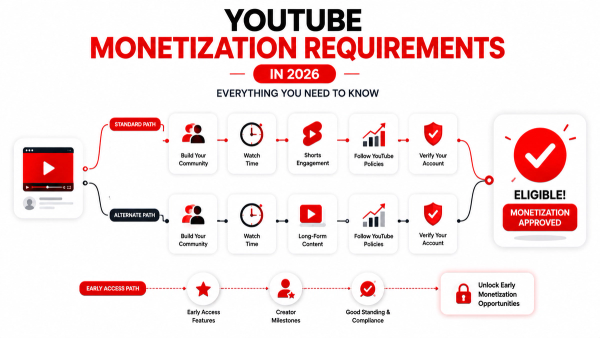
Memberships require YPP approval — you cannot run them on an unmonetized channel. The important detail for smaller creators is that the early-access YPP tier unlocks fan funding without unlocking ads: at 500 subscribers and 3 public uploads in the last 90 days, plus 3,000 watch hours (or 3 million Shorts views), you qualify for the early-access tier, which makes memberships, Super Thanks, Super Chat, and Super Stickers available. Full monetization at 1,000 subscribers and 4,000 watch hours (or 10 million Shorts views) adds ad revenue on top. In practical terms, a focused channel can reach the early-access tier well before the traditional 1,000-subscriber milestone, which means memberships can be a first real income stream rather than an afterthought. Check the current YouTube Partner Program requirements before planning, since thresholds have changed over the years and can vary by region.
Designing Your Tiers
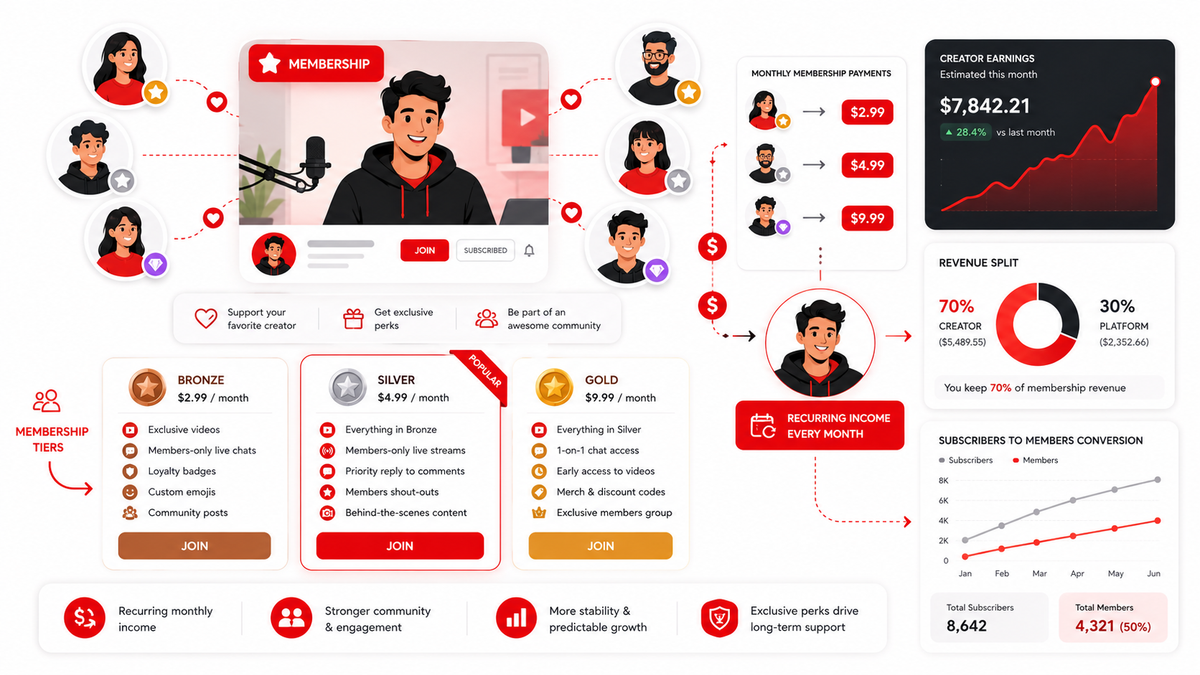
Keep the tier ladder simple. Three tiers is usually enough: an entry tier, the recommended middle tier, and a high tier for superfans. A common structure looks like this:
- $0.99: the community tier — a badge and an emoji, for viewers who want to support but are testing the waters
- $4.99: the standard tier — all the base perks plus monthly member-only content and a members-only community post
- $9.99 and up: the superfan tier — early access to every video, monthly live stream, and direct input on content decisions
Price the high tier where your most committed fans would actually pay, not where you wish they would. The gap between tiers should feel like a real upgrade in access, not just a bigger number. And set the tiers once, then let the data speak — if nearly all signups land at the $0.99 tier, your middle tier is not compelling enough; if nobody takes the top tier, its perks are too weak.
The 70/30 Split and the iOS Caveat
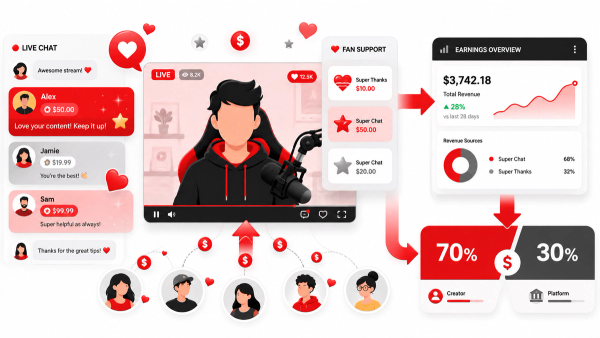
When a member pays, YouTube keeps roughly 30% and you keep roughly 70%. On a $4.99 tier, that nets about $3.49 per member per month. The caveat that surprises many creators: purchases made through the iOS YouTube app carry an additional Apple processing fee of roughly 30%, which effectively halves your already-reduced cut on those members. A viewer joining from an iPhone on the same $4.99 tier nets you less than a viewer joining on the web. You cannot remove the Apple fee for in-app purchases, but you can nudge behavior. Mention once, gently, that joining from a desktop or the web keeps more money in the channel — many loyal members will switch, and the ones who do not are not the ones who will leave over it. The split is the same for all fan funding, and it is why fan funding is a support stream rather than a primary one.
Perks That Actually Convert
Members join for belonging, not for discounts, and the perks that create belonging share a few patterns. Member badges and custom emojis are the foundation — they make membership visible in comments and live chat, which is both a reward and free advertising. Exclusive content converts next: a members-only behind-the-scenes video, a monthly Q and A, or a look at a video before anyone else sees it. Early access is the most universally desired perk, especially for tutorial and educational channels where 'watch it first' has real value. Members-only community posts and live streams deepen the loop by giving members a private space. The perks that convert poorly are transactional ones — discount codes, sweepstakes, anything that feels like a coupon. Educational and tutorial channels routinely convert two to three times better than average because their audiences already treat the creator as a resource worth supporting. Test two or three perks, watch which ones members cite in their welcome notes, and double down on those.
Realistic Conversion Rates
Here is the honest math: a typical channel converts 0.5% to 2% of its subscribers into members. Educational and tutorial channels often land at the top of that range, sometimes better; entertainment channels tend to sit near the bottom. That sounds discouraging until you run the actual numbers, because 2% of a modest subscriber base is still real recurring income. The conversion rate is largely set by your content and community culture — the promotion tactics in this guide move it modestly, but you cannot convert an audience that does not feel invested.
Income by Channel Size
Let us build the income table from the conversion math. All figures are estimates based on 2026 ranges, and your real results depend on tier pricing, retention, and niche.
- 10,000: 1% (100 members), $4.99, ~$349
- 50,000: 1% (500 members), $4.99, ~$1,745
- 100,000: 1% (1,000 members), $5.00, ~$3,500
- 250,000: 1.5% (3,750 members), $5.00, ~$13,125
- 1,000,000: 1% (10,000 members), $5.00, ~$35,000
The numbers assume a 70% keep rate, so the figures are roughly 70% of gross revenue. Notice how the 100K-subscriber benchmark lands at about $3,500 a month — the same ballpark as the often-quoted $5,000 estimate when you factor in a slightly better tier mix and conversion at the top of the range. The point is not the exact figure; it is that membership income compounds with subscriber growth in a way ad revenue does not.
How to Promote Memberships Without Being Pushy
The promotion strategy that works does not pitch; it shows. Mention the membership program naturally at the end of videos with a single line and a pointer to the join button. Let members be visible — thank new members by name on air, which demonstrates value to non-members. Run a members-only perk that occasionally leaks into the public feed as a teaser. And time your pushes to moments of high goodwill: after a big milestone, a helpful video that solves a real problem, or a livestream where the chat is warm. What pushes people away is a hard sell in every video, or gating content that was previously free. A useful frame is to treat membership as support for the channel, with perks as a thank-you, rather than a paywall for content people already expect. The Thumbix YouTube Money Calculator can show you what the membership stream is contributing next to your other income, so you can see the mix in one place. One more promotion tactic worth testing is the membership preview — a short clip of member-only content published publicly, so non-members can see exactly what they are missing without feeling tricked. When the preview ends with a single line pointing to the full version for members, the curiosity feels natural rather than manufactured. Memberships grow fastest when the value is demonstrated rather than announced, and a weekly rhythm of visible member perks keeps the program front-of-mind without a single hard pitch. You are not asking viewers to support out of charity; you are showing them the door and letting the perks justify the step. That distinction, more than any launch strategy, is what separates a membership program that grows from one that quietly stalls.
Memberships and Your Revenue Goal
Memberships are a perfect stream for goal-based planning because the math is so predictable. Decide what you want memberships to contribute each month, then work backward: at your current conversion rate and average tier, how many subscribers do you need, and how far is that from today? If a $4.99 tier nets about $3.49 per member and your conversion runs at 1%, each 1,000 subscribers is worth roughly 10 members and about $35 a month. The Revenue Goal Calculator turns this arithmetic into a monthly target, and it is the honest way to decide whether memberships should be a base layer or a headline in your plan.
How much do YouTube memberships pay creators?
You keep roughly 70% of each membership fee. A $4.99 tier nets about $3.49 per member per month, before the extra Apple processing fee on iOS purchases.
What do I need to be eligible for channel memberships?
YPP approval. The early-access tier at 500 subscribers and 3 uploads in 90 days unlocks memberships and other fan funding; full monetization adds ad revenue.
What is the best price for a membership tier?
$4.99 is the 2026 sweet spot — low enough to be an impulse and high enough to feel like a real exchange. Keep a $0.99 entry tier and a $9.99+ superfan tier above it.
How many subscribers become members?
Typically 0.5% to 2%, with educational and tutorial channels converting two to three times better. A 100K channel at 1% conversion and a $5 average tier earns roughly $3,500 a month.
What perks make people join memberships?
Badges, custom emojis, exclusive content, early access, and members-only community posts or live streams. Perks that create belonging outperform discounts.
Do memberships require 1,000 subscribers?
No. The early-access YPP tier at 500 subscribers unlocks memberships and fan funding without unlocking ad revenue.
Is there an Apple fee on memberships?
Yes — purchases through the iOS app carry an additional Apple processing fee of roughly 30%, on top of YouTube's share. Joining from the web keeps more money in the channel.
Can memberships replace ad revenue?
Rarely on their own, but they are the most predictable stream you have. At 100K subscribers and 1% conversion, memberships can add roughly $3,500 to $5,000 a month.
Final Takeaway
Memberships reward what ads cannot: loyalty. Set up simple tiers around a $4.99 core, build perks that create belonging, understand that 0.5% to 2% conversion is the realistic range, and promote with visibility rather than pressure. The money is recurring, the math is predictable, and the audience you convert into members is the same audience that makes every other income stream stronger. Unlock fan funding at the early-access tier, price honestly, and let the quiet workhorse carry its share.
Frequently Asked Questions
How much do YouTube memberships pay creators?
You keep roughly 70% of each membership fee. A $4.99 tier nets about $3.49 per member per month, before the extra Apple processing fee on iOS purchases.
What do I need to be eligible for channel memberships?
YPP approval. The early-access tier at 500 subscribers and 3 uploads in 90 days unlocks memberships and other fan funding; full monetization adds ad revenue.
What is the best price for a membership tier?
$4.99 is the 2026 sweet spot — low enough to be an impulse and high enough to feel like a real exchange. Keep a $0.99 entry tier and a $9.99+ superfan tier above it.
How many subscribers become members?
Typically 0.5% to 2%, with educational and tutorial channels converting two to three times better. A 100K channel at 1% conversion and a $5 average tier earns roughly $3,500 a month.
What perks make people join memberships?
Badges, custom emojis, exclusive content, early access, and members-only community posts or live streams. Perks that create belonging outperform discounts.
Do memberships require 1,000 subscribers?
No. The early-access YPP tier at 500 subscribers unlocks memberships and fan funding without unlocking ad revenue.
Is there an Apple fee on memberships?
Yes — purchases through the iOS app carry an additional Apple processing fee of roughly 30%, on top of YouTube's share. Joining from the web keeps more money in the channel.
Can memberships replace ad revenue?
Rarely on their own, but they are the most predictable stream you have. At 100K subscribers and 1% conversion, memberships can add roughly $3,500 to $5,000 a month.