Table of Contents
- Introduction
- Why Commission Structure Beats Brand Names
- The Highest-Paying Categories
- SaaS and Software: 20% to 65% Recurring
- Finance: $50 to $200 Per Lead
- Digital Products and Courses
- Shopify: $150 Flat Per Referral
- Amazon: The Volume Play at 3% to 4.5%
- Comparing the Categories
- Recurring Commissions and Cookie Windows
- FTC Disclosure and Staying Trustworthy
- Choosing Programs That Fit Your Niche
- Frequently Asked Questions
- Final Takeaway
Not all affiliate programs are equal: software pays 20% to 65% recurring, finance pays $50 to $200 a lead, and Amazon pays 3% to 4.5% on volume. Here is how to pick for your niche.
When most people think affiliate marketing, they picture Amazon links and 3% commission checks. They are missing the actual money. The highest-paying affiliate categories on YouTube in 2026 pay software affiliates 20% to 65% — often recurring — finance programs $50 to $200 per approved lead, Shopify $150 flat per qualified referral, and course creators 30% to 50% of a sale. Amazon is the volume play, not the money play. This guide breaks down the commission structures that actually pay, how recurring commissions and cookie windows change the math, and how to choose programs that fit your niche and keep your audience's trust.
Introduction
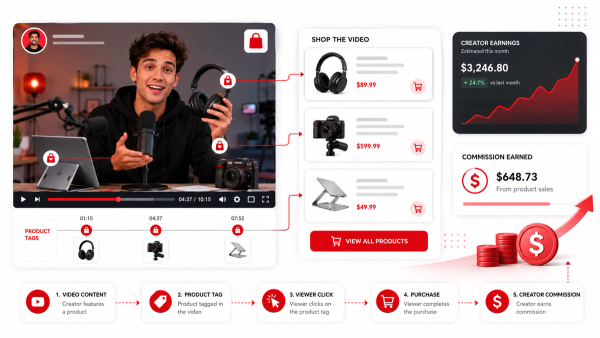
Affiliate marketing on YouTube is simple to understand and easy to do badly. You share a tracked link, a viewer buys, you earn a percentage. But the difference between a creator earning pocket money and a creator earning a salary from affiliates is almost entirely program selection. A single finance lead can out-earn a thousand Amazon clicks, and a recurring SaaS commission can pay you for years. This guide covers the highest-paying categories in 2026, the mechanics that determine what you actually keep, the disclosure rules that protect you, and the strategy for picking programs your audience will actually click.
Why Commission Structure Beats Brand Names
Every affiliate decision starts with one number: what do you earn when someone converts? Brand recognition inflates the decision. A well-known retailer's program might sound impressive and pay a token 2% commission, while an unknown software company pays 40% recurring on the same effort. Structure beats brand names every time, because the structure decides whether one sale is worth $3 or $300. The second number is recurrence. A one-time commission is over the moment the sale closes; a recurring commission keeps paying as long as the customer stays subscribed. A $30-a-month SaaS referral at 40% recurring is worth $12 a month for the life of the account — twelve months of one customer beats twelve one-time sales of cheap products. These are estimates, not guarantees, but the structure is what determines your ceiling.
The Highest-Paying Categories
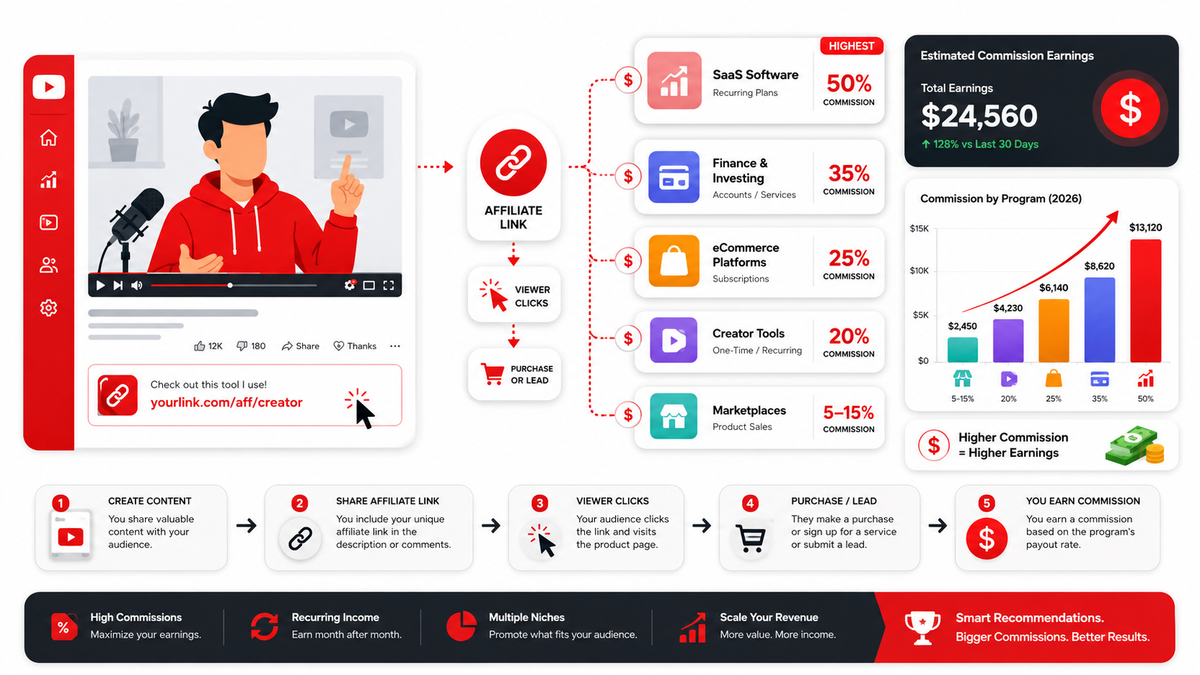
Across the affiliate landscape in 2026, four categories dominate the high-payout end:
- SaaS and software: 20% to 65%, frequently recurring
- Finance: $50 to $200 per approved lead
- Digital products and courses: 30% to 50% of the sale, sometimes more
- Shopify: roughly $150 flat per qualified referral
Below them sits the volume tier — Amazon and similar retailers at 3% to 4.5% with a 24-hour cookie, and Etsy at 4% to 8% with a 30-day cookie. Neither is bad; both are volume games. The sections below unpack each tier so you can match programs to your channel.
SaaS and Software: 20% to 65% Recurring
Software is the category most creators underuse, and it is the category with the highest sustained payouts. Productivity tools, editing software, website builders, email tools, and creator apps commonly offer 20% to 65% commissions, and the best ones make them recurring — you keep earning while your referral remains a paying customer. For a channel whose viewers are creators, editors, or small-business owners, software affiliates can quietly become the largest single income stream in the mix. The fit is natural because software purchases are exactly the kind of decision viewers research on YouTube. A video comparing two editing tools, or a workflow video that happens to feature a paid tool, is content that converts. The commission numbers are estimates and vary by program, but the pattern is consistent: software rewards niche experts, not big audiences.
Finance: $50 to $200 Per Lead
Finance affiliate programs pay per action rather than per sale: you earn a flat fee, typically $50 to $200, when a viewer submits a qualifying lead — like applying for a credit card, opening a brokerage account, or requesting a loan quote. Because the payout per action is high and the products are relevant to everyone with money, finance affiliates are among the most lucrative programs on the internet, and the most competitive. Finance content has a trust problem, and it should. A channel that recommends a credit card while hiding the commission reads as a shill, and finance audiences are the most skeptical on the platform. The creators who succeed in this category lead with genuine comparisons, disclose their affiliate relationships clearly, and recommend products they would use themselves. The payouts are real; the trust required to earn them is higher.
Digital Products and Courses
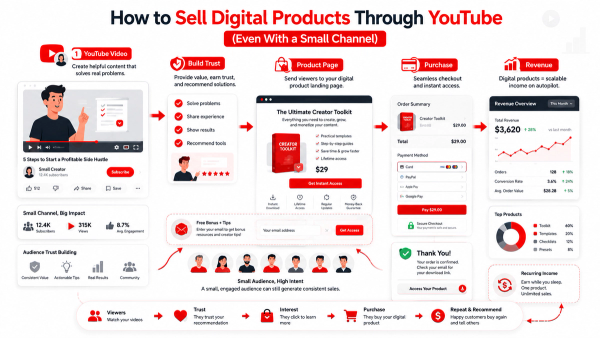
Digital products and online courses offer some of the best margins in affiliate marketing because there is no physical shipping or inventory cost for the seller to absorb. Course creators routinely pay affiliates 30% to 50% of the sale price, and software-as-a-service products layer recurring commissions on top. For a creator whose audience is already buying learning materials — tutorial channels, education channels, business channels — promoting other creators' courses is both a commission stream and a relationship builder. The elegant part is reciprocity: the creators whose courses you promote often promote yours back, or at minimum respect a channel that recommends quality products. Digital product affiliates typically use longer cookie windows and generous thresholds, and they reward trusted educators over loud promoters.
Shopify: $150 Flat Per Referral
Shopify's partner program pays roughly $150 flat per qualified referral — someone who starts a paid trial or signs up for a plan through your link. That flat fee is worth noting because a single referral can rival a month of ad revenue, and Shopify is relevant to a huge slice of YouTube's audience: small business channels, dropshipping channels, creator-economy channels, and anyone who teaches or covers e-commerce. The catch is the same one every flat-fee program shares: the payout is binary. You earn nothing for a click that does not convert, so Shopify referrals work best on channels whose viewers are already deciding to build a store. When the fit is right, though, the per-referral value is hard to beat.
Amazon: The Volume Play at 3% to 4.5%
Amazon Associates is the program most beginners join, and it deserves an honest assessment: standard commissions run about 3% to 4.5% with a tight 24-hour cookie, which means you are paid for a window that barely covers one browsing session. You can earn from Amazon, but you need real traffic volume to turn that commission into meaningful income, and the economics favor high-priced, high-intent products rather than a sprawl of small recommendations. Amazon still has a role: it is the easiest program to join, the products are universal, and 'links to buy the gear' fits many niches comfortably. Treat it as the volume baseline of your affiliate mix, not the star. The money is in the higher-margin categories above.
Comparing the Categories
- SaaS / software: 20% to 65%, often recurring, 30 to 90 days typical, Tutorial, tech, creator niches
- Finance: $50 to $200 per lead, Varies by program, Money, finance, review channels
- Digital products / courses: 30% to 50% of sale, 30 to 90 days typical, Education, tutorial channels
- Shopify: ~$150 flat per referral, Varies, Business, e-commerce niches
- Amazon: 3% to 4.5%, 24 hours, Any niche, volume play
- Etsy: 4% to 8%, 30 days, Crafts, design, lifestyle niches
Every figure in this table is an estimate from 2026 program ranges, and individual programs vary. Use the table to think about structure — which category rewards your niche the most — rather than to shop specific rates.
Recurring Commissions and Cookie Windows
Two mechanics determine whether affiliate income compounds or dribbles. Recurring commissions are the compounding one: you keep earning on a customer until they cancel, which means a few hundred software referrals can produce a six-figure annual base over time. Cookie windows are the other one: the cookie determines how long after a viewer clicks your link you still get credit for the purchase. Amazon's 24-hour window is the strictest; software and digital product programs commonly run 30 to 90 days, which matters because viewers often research for weeks before buying. When you choose programs, check both numbers before you check the percentage. A 30% commission with a 90-day cookie can out-earn a 50% commission with a 24-hour cookie, because more purchases fall inside your window.
FTC Disclosure and Staying Trustworthy
Affiliate income lives or dies on trust, and the FTC requires you to disclose affiliate relationships in your video descriptions — typically a simple line like 'Some links in this description are affiliate links, and I may earn a commission at no extra cost to you.' The rule is not optional, and it protects you from the accusation that matters most to an affiliate marketer: hidden motive. Beyond compliance, the strategy is simple: only promote products you have actually used or can honestly evaluate, and say when a recommendation is a compromise. An audience that gets burned once stops clicking links for years. The highest-paying programs are worthless without clicks, and clicks are worthless without trust.
Choosing Programs That Fit Your Niche
The best affiliate program is the one your audience will actually buy. A finance channel should favor per-lead finance programs and business software. A tech channel should stack SaaS with recurring commissions. A craft or beauty channel should lean on Etsy, retail programs, and shopping categories. A creator-economy channel should promote the tools it genuinely uses — editing software, thumbnail tools, course platforms — because that is what viewers come for. Match the payout structure to your niche's buying behavior, and let content lead. A product that appears naturally in a helpful video converts better than a link crammed into an unrelated one. The Thumbix YouTube Money Calculator can show you what an affiliate stream is contributing alongside your other income, and the Revenue Goal Calculator can back into how many affiliate sales you need per month to hit a target. Affiliate income is never guaranteed, but structured correctly it is the most passive stream you will ever build.
What affiliate programs pay the highest commissions?
SaaS and software programs at 20% to 65% (often recurring), finance programs at $50 to $200 per lead, digital products and courses at 30% to 50% of sale, and Shopify at roughly $150 flat per referral are the highest-paying categories in 2026.
How do recurring affiliate commissions work?
You keep earning a percentage of a customer's subscription for as long as they stay subscribed. A $30-per-month SaaS referral at 40% recurring pays roughly $12 a month for the life of the account.
Is Amazon Associates worth it for YouTube creators?
It is a volume play, not a money play. Standard commissions are about 3% to 4.5% with a 24-hour cookie, so it works best on high-traffic channels selling high-priced, high-intent products.
Do I need many subscribers to earn from affiliates?
No. Affiliate programs typically have no subscriber minimum. Small, trusted audiences convert better than large, passive ones, especially in high-payout categories like SaaS and finance.
What is a cookie window?
The time after a viewer clicks your link during which you still get credit for the purchase. Amazon's window is 24 hours; software and digital products commonly run 30 to 90 days.
How do I disclose affiliate links on YouTube?
Add a clear line in your description, such as 'Some links are affiliate links and I may earn a commission at no extra cost to you.' FTC disclosure is required, not optional.
What are the best finance affiliate programs for YouTube?
Programs that pay a flat fee per approved lead — typically $50 to $200 for applications or account openings. Choose programs whose products you would honestly recommend, since finance audiences are the most skeptical.
How much can I realistically earn from affiliate marketing?
It depends on traffic, niche, and program structure. A tech channel with a few thousand monthly sales of a $30 SaaS product at 40% recurring can out-earn a bigger channel promoting cheap physical products. All estimates.
Final Takeaway
Affiliate income rewards structure, not brand names. Software's 20% to 65% recurring commissions, finance's $50 to $200 per lead, course margins at 30% to 50%, and Shopify's $150 flat referrals all dwarf the 3% to 4.5% Amazon baseline — but only if the program fits your niche and your audience trusts you. Check the payout and the cookie window before the brand, disclose honestly, recommend what you would defend, and let content lead. Built that way, affiliate marketing is the closest thing YouTube offers to passive income.
Frequently Asked Questions
What affiliate programs pay the highest commissions?
SaaS and software programs at 20% to 65% (often recurring), finance programs at $50 to $200 per lead, digital products and courses at 30% to 50% of sale, and Shopify at roughly $150 flat per referral are the highest-paying categories in 2026.
How do recurring affiliate commissions work?
You keep earning a percentage of a customer's subscription for as long as they stay subscribed. A $30-per-month SaaS referral at 40% recurring pays roughly $12 a month for the life of the account.
Is Amazon Associates worth it for YouTube creators?
It is a volume play, not a money play. Standard commissions are about 3% to 4.5% with a 24-hour cookie, so it works best on high-traffic channels selling high-priced, high-intent products.
Do I need many subscribers to earn from affiliates?
No. Affiliate programs typically have no subscriber minimum. Small, trusted audiences convert better than large, passive ones, especially in high-payout categories like SaaS and finance.
What is a cookie window?
The time after a viewer clicks your link during which you still get credit for the purchase. Amazon's window is 24 hours; software and digital products commonly run 30 to 90 days.
How do I disclose affiliate links on YouTube?
Add a clear line in your description, such as 'Some links are affiliate links and I may earn a commission at no extra cost to you.' FTC disclosure is required, not optional.
What are the best finance affiliate programs for YouTube?
Programs that pay a flat fee per approved lead — typically $50 to $200 for applications or account openings. Choose programs whose products you would honestly recommend, since finance audiences are the most skeptical.
How much can I realistically earn from affiliate marketing?
It depends on traffic, niche, and program structure. A tech channel with a few thousand monthly sales of a $30 SaaS product at 40% recurring can out-earn a bigger channel promoting cheap physical products. All estimates.