Table of Contents
- Introduction
- The Nano-Creator Reality
- What Brands Actually Want From Small Channels
- Start With Product and Gifted Deals
- Your One-Page Pitch
- Building a Media Kit That Helps
- Outreach: Finding and Pitching Brands
- Why Engagement Rate Matters More Than Subscribers
- The Small-Channel Pitch Checklist
- Negotiating When Offers Come In
- Frequently Asked Questions
- Final Takeaway
Sponsorships are not reserved for big channels. Under 10K subscribers, brands pay $50 to $500 per video — if you can show niche authority, steady views, and real engagement. Here is the playbook.
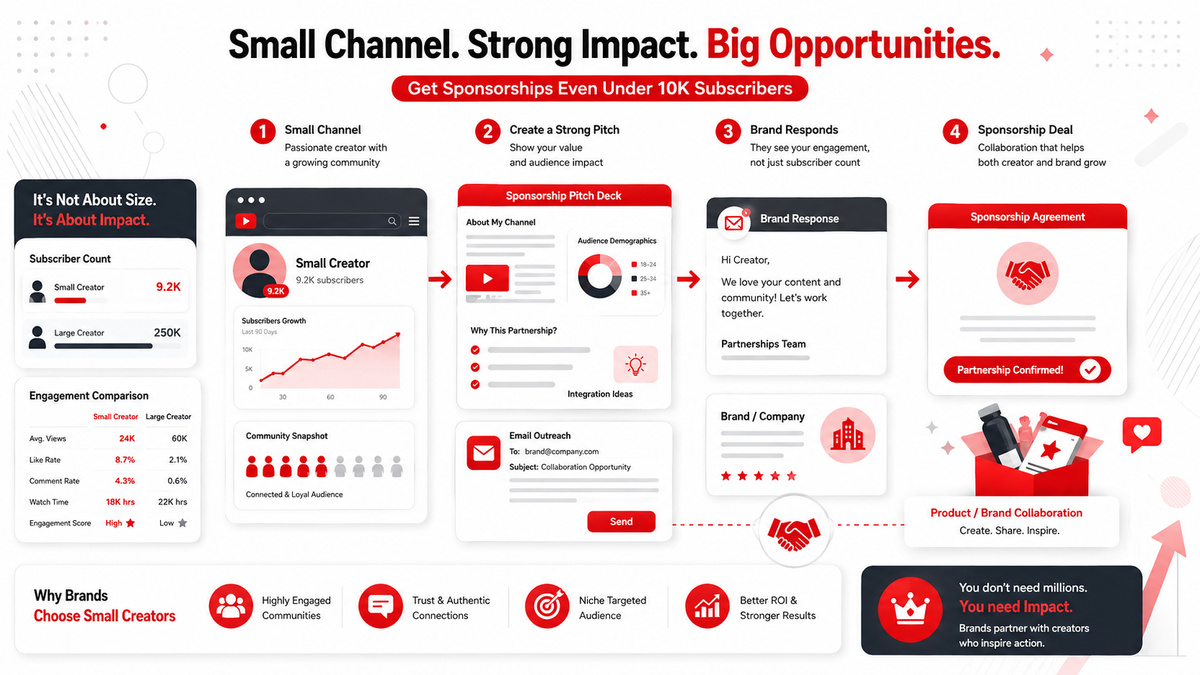
Every small creator assumes sponsorships start at 100K subscribers. That assumption is expensive. Brands sponsor channels with 5,000 subscribers every week, because a tiny channel with a dedicated niche audience and a 7% engagement rate is worth more to the right brand than a big channel whose viewers scroll past. The pay is modest at that size — roughly $50 to $500 per video — but the deals are real, they compound into a track record, and they fund growth. This guide covers what brands actually want from small channels, why product deals come first, how to build a one-page pitch and media kit, how to find and approach the right brands, and why engagement rate is the number that wins deals.
Introduction
The sponsorship market is not a ladder where small channels wait their turn. It is a matchmaking market, and the match is between a brand's campaign and a specific audience. A 6K-subscriber channel reviewing niche software for business owners is a perfect match for that software company's budget, in a way a 500K-subscriber general entertainment channel is not. This guide walks through the nano-creator reality, the evidence brands look for, the product-deal stage, the pitch, the media kit, the outreach, the negotiation, and the engagement math that makes small channels bankable.
The Nano-Creator Reality
Let us start with honest numbers. For channels between 1K and 10K subscribers, paid sponsorships typically run $50 to $500 per video, with niche and engagement deciding where in that range you land. Sponsored Shorts pay even less per placement. That is not a fortune, but it is real income, it beats the pennies ad revenue produces at that size, and it builds the two assets you cannot buy: a portfolio of branded content and relationships with brand managers who will follow you as you grow. The other part of the reality is that the first deals are usually not cash. They are product or gifted deals — the brand sends free product in exchange for a video. Those deals look like payment to a small channel because they are: a $200 product, a $50 affiliate arrangement, and a piece of portfolio content that proves you can deliver a brand integration. The creators who treat product deals as stepping stones, not slights, are the ones who turn them into paid retainers.
What Brands Actually Want From Small Channels
Brands sponsor small channels for reasons that have nothing to do with reach. They want niche authority — a channel that owns a specific topic so completely that its word on the topic carries weight. They want engaged communities, measured by likes, comments, and the quality of the conversation in the comment section, because an engaged small audience buys and converts better than a passive large one. And they want consistency — a creator who uploads on schedule, because a brand planning a campaign needs to know your next video will exist. There is a fourth, quieter reason brands work with small channels: affordability and authenticity. A nano-creator integration costs a fraction of a macro deal and reads as a genuine recommendation rather than a commercial. For challenger brands with limited budgets, a roster of small, credible niche creators beats one unaffordable big name.
Start With Product and Gifted Deals
The fastest path into the sponsorship market is the product deal. Identify brands in your niche whose products you already use or would genuinely want, and pitch a simple exchange: product for an honest video. The bar for these deals is low and the barrier to entry is near zero, because the brand's risk is just the cost of the product. If the video performs, you are on their radar for the paid conversation; if it does not, the brand spent one box of product. A few rules keep product deals useful. Only pitch brands you can review honestly — an audience that catches you endorsing something you dislike costs you more than the product is worth. Negotiate the affiliate link into the deal so good-performing videos pay twice. And always deliver professional-quality content, because a product deal is also an audition. Brands share their small-channel successes internally; the creator who over-delivers on a free deal becomes the creator who gets paid.
Your One-Page Pitch
A one-page pitch is the document that turns a cold email into a reply. It fits on a phone screen and answers the only question a brand manager has: what do I get, for what price, and why your audience specifically? The structure is the same one the pitch email guide uses, expanded into a page:
- The hook: one line naming the brand and why this fit is different
- The channel: 90-day average views, engagement rate, subscriber count, and upload cadence
- The audience: who your viewers are, in one or two lines — demographics, location, behavior
- The offer: what a collaboration would look like and what it includes
- The rate: your price, with room to negotiate
- The proof: links to your two best-performing videos and any past brand work
Keep the page scannable. Brand managers skim before they read, so lead with the numbers and let the proof speak. The Thumbix Sponsorship Calculator produces the rate line for you from your real 90-day views and niche CPM, so the page never has a number you cannot defend.
Building a Media Kit That Helps
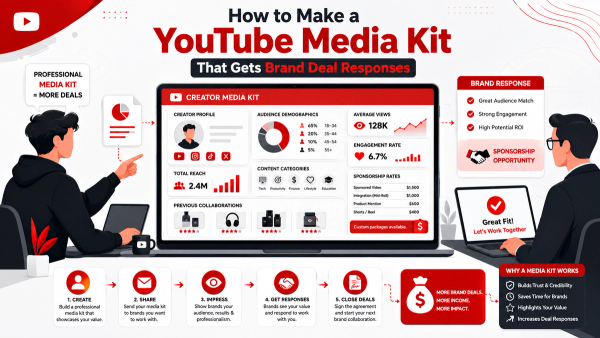
A media kit is your channel as a sales document, and for a small channel it does one job: it answers objections before the brand asks. Include your stats over the last 90 days, your engagement rate, audience breakdown, upload consistency, and two or three example integrations. The key move is to make the kit reflect momentum — brands fund growth, so show the last 90 days trending up, not a flat all-time line. The mistake small creators make is overbuilding the kit. A one-page kit with real numbers beats a twenty-page brochure with aspirational ones. Link it in your pitch rather than attaching it, so it does not trip spam filters, and update it the same day your numbers change. Our guide to creating a YouTube media kit covers the structure in detail.
Outreach: Finding and Pitching Brands
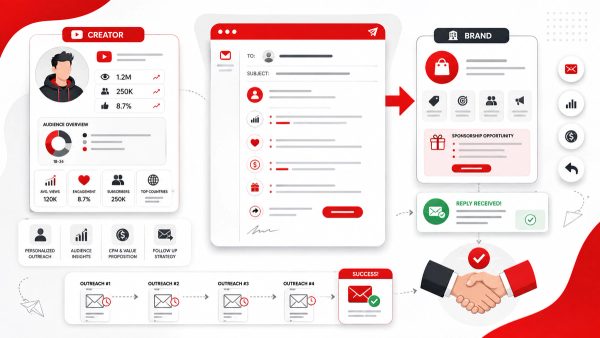
The right brands are the ones already spending on creators in your niche. Find them three ways: check which brands are sponsoring channels your size, search your niche's keywords plus 'sponsor' or 'partnership', and look at the brands whose products your audience already discusses in your comments. Your comment section is the most underused market-research tool on the platform — if viewers already ask where to buy something, that brand has a ready case for sponsoring you. When you pitch, send fewer, better emails. Five tailored pitches to brands that actually fit beat forty template blasts. Reference something specific about the brand's current campaign or product, name the fit in one line, include the numbers, and end with one clear ask. Then follow up twice: once after five to seven business days, once more after two weeks, and move on. Most replies come after the first follow-up.
Why Engagement Rate Matters More Than Subscribers
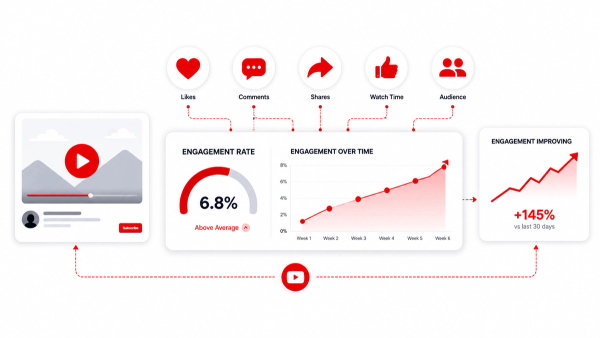
Engagement rate is the number that makes a small channel bankable, and brands read it before they read your subscriber count. A healthy long-form engagement rate runs roughly 4% to 8% — likes plus comments divided by views over the last 90 days. A 7% engagement rate with 15,000 average views signals an audience that acts, which is exactly what a brand wants to buy. The same 15,000 views with a 1% rate signals an audience that scrolls. Compute your engagement rate before you ever pitch, not while a brand manager is waiting. The Thumbix YouTube Engagement Rate Calculator turns your likes, comments, and views into the percentage in seconds, and it belongs in every pitch and media kit you send. When a brand asks 'why should we sponsor you?', the answer is the number — not the vibe.
The Small-Channel Pitch Checklist
Run this checklist before any pitch goes out:
- 90-day average views pulled from Studio, not all-time
- Engagement rate calculated from the same 90-day window
- One-line niche fit that names the brand's current campaign
- Two best-performing videos linked and easy to open
- One-page pitch or media kit linked, not attached
- Rate quoted from the CPM formula, with negotiation room
- One clear ask and a next step
- Follow-up dates planned before you send
Each item is a question a brand could ask; the checklist makes sure your answer is ready. A channel that checks all eight boxes reads as a professional regardless of subscriber count.
Negotiating When Offers Come In
When an offer arrives, remember the market reality: brands open 30% to 40% below their budget expecting negotiation. Your first counter should come from your calculated rate, not your optimism. If a brand offers $150 for a video your formula prices at $250, counter at $250 and justify it with the engagement number and the niche. You will not win every negotiation, and you should not — some offers are below the value of your audience, and the fastest way to learn your worth is to turn a few down. Package the small asks. If the cash is non-negotiable, trade for the affiliate link, a longer placement window, usage rights, or a commitment to repeat. The Brand Deal Calculator shows the per-format math, and the goal of every negotiation is a deal you would happily do again, because sponsorship income is built on repeat relationships, not one-off wins.
Can channels under 10K subscribers get sponsorships?
Yes, regularly. Brands sponsor nano creators for niche authority, engagement, and authenticity. Paid deals at this size typically run $50 to $500 per video, with niche and engagement deciding the rate.
How much can small channels charge for sponsorships?
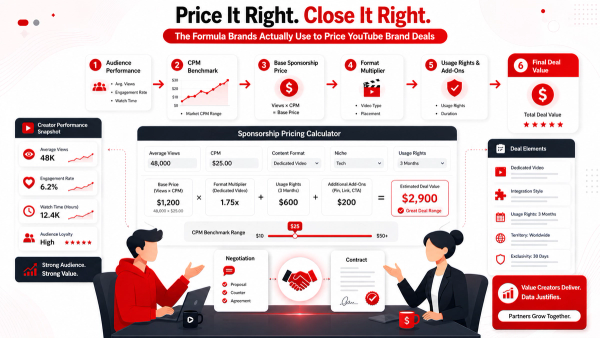
Use the CPM formula: (90-day average views / 1,000) x niche CPM. Most small channels land between $50 and $500 per long-form video, and brands open 30% to 40% below budget, so quote above your floor.
What do brands want from nano creators?
Niche authority, an engaged community, upload consistency, and authenticity. A small channel with a 6% engagement rate in a specific niche is more valuable to the right brand than a passive larger audience.
How do I find brands to pitch as a small channel?
Check which brands already sponsor channels your size, search your niche keywords plus 'sponsor', and watch your own comment section for products viewers already ask about.
Should I take free product deals?
Yes, strategically. Product deals are the fastest entry into the market, they build your portfolio, and they put you on a brand's radar for paid work — if you can review the product honestly and you negotiate the affiliate link.
How do I build a one-page pitch?
Hook, channel stats, audience, offer, rate, and proof — six sections that fit on a phone screen. Link the media kit instead of attaching it, and quote your rate from the CPM formula.
Why does engagement matter more than subscribers?
Engagement predicts buying behavior; subscribers do not. A 7% engagement rate signals an audience that acts, which is what a brand pays for. Healthy long-form engagement runs roughly 4% to 8%.
How long does it take to land a first sponsorship?
For a channel with steady views and a clear niche, expect a few months of consistent pitching. Most replies come after the first follow-up, and the first deal usually arrives faster than the second.
Final Takeaway
Sponsorships are not gated at 100K subscribers. Brands buy niche authority, engagement, and consistency — the exact assets a small channel can build from day one. Start with product deals to build a portfolio, prepare a one-page pitch with a linked media kit, target brands your audience already cares about, and lead every conversation with your 90-day views and engagement rate. The pay is modest at first and the rejections outnumber the yeses, but every yes is a case study for the next pitch. Price with the formula, negotiate with the data, and let the small-channel track record compound into the deals you want.
Frequently Asked Questions
Can channels under 10K subscribers get sponsorships?
Yes, regularly. Brands sponsor nano creators for niche authority, engagement, and authenticity. Paid deals at this size typically run $50 to $500 per video, with niche and engagement deciding the rate.
How much can small channels charge for sponsorships?
Use the CPM formula: (90-day average views / 1,000) x niche CPM. Most small channels land between $50 and $500 per long-form video, and brands open 30% to 40% below budget, so quote above your floor.
What do brands want from nano creators?
Niche authority, an engaged community, upload consistency, and authenticity. A small channel with a 6% engagement rate in a specific niche is more valuable to the right brand than a passive larger audience.
How do I find brands to pitch as a small channel?
Check which brands already sponsor channels your size, search your niche keywords plus 'sponsor', and watch your own comment section for products viewers already ask about.
Should I take free product deals?
Yes, strategically. Product deals are the fastest entry into the market, they build your portfolio, and they put you on a brand's radar for paid work — if you can review the product honestly and you negotiate the affiliate link.
How do I build a one-page pitch?
Hook, channel stats, audience, offer, rate, and proof — six sections that fit on a phone screen. Link the media kit instead of attaching it, and quote your rate from the CPM formula.
Why does engagement matter more than subscribers?
Engagement predicts buying behavior; subscribers do not. A 7% engagement rate signals an audience that acts, which is what a brand pays for. Healthy long-form engagement runs roughly 4% to 8%.
How long does it take to land a first sponsorship?
For a channel with steady views and a clear niche, expect a few months of consistent pitching. Most replies come after the first follow-up, and the first deal usually arrives faster than the second.